
PVI Encoder IPTV technology is revolutionizing how we consume and distribute media. This cutting-edge solution transforms traditional video signals into digital streams. Businesses and individuals worldwide are leveraging PVI Encoder IPTV for its efficiency and versatility. Understanding the intricacies of PVI Encoder IPTV is key to unlocking its full potential.
Understanding PVI Encoder IPTV Technology
IPTV, or Internet Protocol Television, delivers television content over IP networks. A PVI Encoder IPTV system is central to this process. It takes analog or digital video inputs and converts them. These inputs become IP packets, ready for network distribution.

What is a PVI Encoder?
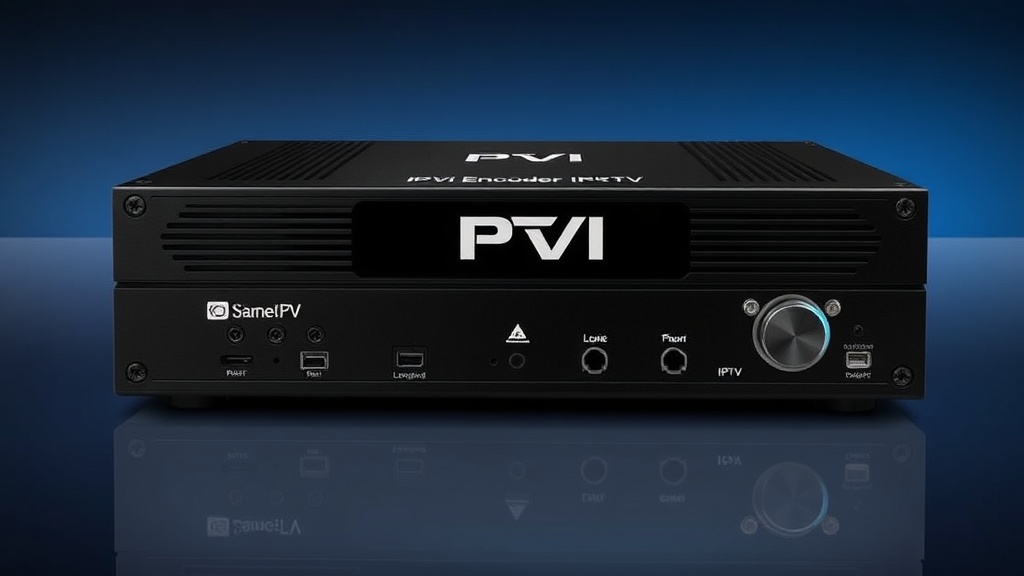
A PVI encoder is a specialized hardware device. It compresses video and audio signals into a digital format. This format is suitable for streaming over IP networks. These encoders support various input types.
They can handle HDMI, SDI, composite, and component inputs. The output is typically an MPEG-TS (MPEG Transport Stream). This stream is then multicast or unicast across a network. Reliability and quality are hallmarks of effective PVI encoder solutions.
How IPTV Works with Encoders
The journey of an IPTV stream begins with the encoder. First, a video source feeds into the PVI encoder. Second, the encoder compresses and packetizes the data. Third, these IP packets travel over a network.
Finally, a receiver or set-top box decodes the stream. This process restores the original video and audio. This seamless workflow is what makes PVI Encoder IPTV so powerful. It enables high-quality content delivery anywhere with internet access.
Why Choose PVI Encoder IPTV Solutions?
Adopting PVI Encoder IPTV brings numerous advantages. It offers unparalleled flexibility in content distribution. Businesses can reach a wider audience more effectively. This technology also ensures high-quality viewer experiences.
Cost efficiency is another major benefit. Traditional broadcast infrastructure is expensive to maintain. IPTV leverages existing IP networks, reducing overhead. This makes it an attractive option for many organizations.
Enhanced Scalability and Reach
PVI encoder IPTV systems are highly scalable. You can easily add more channels or viewers. This adapts to growing demands without major overhauls. Geographical boundaries become less of a concern.
Content can be delivered globally through the internet. This expanded reach is vital for modern businesses. It opens new markets and audience segments. Consider exploring ServoIPTV’s channel offerings to see the vast possibilities.
Superior Video Quality and Reliability
Modern PVI encoders deliver exceptional video quality. They support resolutions up to 4K and beyond. Advanced compression algorithms ensure minimal loss. Viewers enjoy crisp, clear images and immersive sound.
Moreover, IPTV systems are designed for reliability. They often include redundancy features. This minimizes downtime and ensures continuous service. A robust PVI Encoder IPTV setup is key to this performance.
Key Features of PVI Encoder IPTV Systems
Modern PVI Encoder IPTV systems come packed with features. These features enhance functionality and user experience. They cater to a wide range of applications and industries. Understanding these capabilities helps in making informed choices.
From supporting various codecs to offering advanced management tools, the options are extensive. These systems are designed for both simple and complex deployments. They provide the backbone for superior IPTV services.
Codec Support and Stream Formats
PVI encoders support a variety of video codecs. H.264 and H.265 (HEVC) are common examples. H.265 offers better compression efficiency. This means higher quality at lower bitrates.
Encoders also output various stream formats. These include UDP, RTP, RTMP, and HTTP Live Streaming (HLS). This versatility ensures compatibility with many devices. It also allows for diverse distribution strategies.
Management and Monitoring Tools
Effective IPTV systems include robust management tools. These tools allow administrators to control streams. They can monitor performance and troubleshoot issues. Centralized management simplifies operations.
Alerts and analytics provide insights into system health. This proactive approach ensures optimal service delivery. Choosing a system with comprehensive management is crucial. This helps in maintaining a high-quality PVI Encoder IPTV service.
Implementing PVI Encoder IPTV for Your Business
Implementing a PVI Encoder IPTV solution requires careful planning. Businesses must assess their specific needs. This includes identifying target audiences and content types. A well-executed plan ensures a smooth rollout.
From hardware selection to network configuration, each step is vital. Proper implementation leads to a reliable and efficient system. It maximizes the return on investment. Many businesses find value in professional guidance.
Choosing the Right PVI Encoder
Selecting the correct PVI encoder is paramount. Consider the number of input sources you need. Evaluate the required video resolution and quality. Budget constraints also play a significant role.
Research different brands and models. Look for features like multi-channel support and advanced encoding options. Reading reviews and seeking expert advice can be beneficial. Don’t forget to check compatibility with your existing infrastructure.
Network Infrastructure Requirements
A robust network is essential for IPTV. Ensure your network can handle the bandwidth. High-definition streams require significant network capacity. A stable and fast internet connection is non-negotiable.
Consider using managed switches for better control. Quality of Service (QoS) settings can prioritize video traffic. This prevents buffering and ensures a smooth viewing experience. Proper network planning supports your entire PVI Encoder IPTV deployment.
Optimizing Your PVI Encoder IPTV Experience
Once implemented, optimizing your PVI Encoder IPTV system is crucial. Continuous optimization ensures peak performance. It enhances viewer satisfaction and system efficiency. Small adjustments can yield significant improvements.
Regular maintenance and monitoring are key components. Staying updated with the latest software and hardware is also beneficial. This proactive approach helps in avoiding potential issues. It truly maximizes your investment.
Bandwidth Management and Quality of Service (QoS)
Efficient bandwidth management is vital for IPTV. It prevents congestion and ensures smooth streaming. Implement QoS policies on your network. This prioritizes video traffic over less time-sensitive data.
Monitor your network usage regularly. Adjust bitrates as needed to balance quality and bandwidth. Tools exist to help analyze network performance. Effective management leads to a better user experience for all.
Security Measures for IPTV Streams
Securing your IPTV streams is increasingly important. Content protection prevents unauthorized access. Digital Rights Management (DRM) solutions are often employed. These encrypt streams and control access.
Network security, like firewalls and VPNs, adds another layer of protection. Regular security audits are recommended. Protecting your content and infrastructure safeguards your investment. This ensures a trustworthy PVI Encoder IPTV service.
Future Trends in PVI Encoder IPTV Technology for 2025
The landscape of IPTV technology is constantly evolving. Looking ahead to 2025, several trends will shape PVI Encoder IPTV. These advancements promise even more immersive and efficient experiences. Staying informed helps businesses prepare for the future.
From AI integration to higher resolutions, the possibilities are exciting. These innovations will further cement IPTV’s role in media distribution. They promise to enhance both content creation and consumption.
AI and Machine Learning Integration
Artificial intelligence will play a bigger role in IPTV. AI can optimize video compression in real-time. This leads to better quality at lower bitrates. Machine learning can also personalize content recommendations.
Predictive analytics can anticipate network congestion. This allows for proactive adjustments. AI-powered monitoring will enhance system reliability. These integrations will make PVI Encoder IPTV systems smarter and more efficient.
Rise of 8K Streaming and Immersive Experiences
The demand for higher resolutions continues to grow. 8K streaming is becoming more feasible. PVI encoders will evolve to support these ultra-high definitions. This will deliver incredibly detailed visuals.
Immersive experiences like virtual reality (VR) and augmented reality (AR) are also on the horizon. IPTV infrastructure will adapt to these new formats. This promises a truly engaging future for viewers. For specific device compatibility, check out ServoIPTV’s supported devices.
Choosing the Right PVI Encoder IPTV Provider
Selecting a reliable PVI Encoder IPTV provider is a critical decision. The right partner ensures smooth operations and quality service. Consider their experience, support, and technology stack. A reputable provider offers peace of mind.
They should align with your business goals and technical requirements. Don’t hesitate to ask for case studies or references. A strong partnership is foundational for long-term success. Exceptional customer support, like that found on ServoIPTV’s support page, is always a plus.
Evaluating Provider Expertise and Support
Assess a provider’s expertise in IPTV and encoding. Look for a track record of successful deployments. A knowledgeable team can guide you through setup and optimization. Excellent technical support is non-negotiable.
Ensure they offer 24/7 support if your operations demand it. Responsiveness and problem-solving skills are key. A good provider becomes an extension of your team. This ensures your PVI Encoder IPTV system runs flawlessly.
Cost-Effectiveness and Scalability Options
Compare pricing models from different providers. Look for transparent billing and no hidden fees. Consider long-term costs versus initial investment. A cost-effective solution doesn’t compromise on quality.
Ensure the provider offers scalable options. Your needs may grow over time. The system should be able to expand easily. This flexibility prevents costly migrations in the future. Check out ServoIPTV’s pricing plans for competitive options.
Troubleshooting Common PVI Encoder IPTV Issues
Even with the best systems, issues can arise. Knowing how to troubleshoot common PVI Encoder IPTV problems saves time. Quick resolution minimizes service disruption. Many problems have straightforward solutions.
Regular checks and a systematic approach are helpful. Documenting your system configuration is also beneficial. This knowledge empowers you to maintain a robust IPTV service. It ensures a consistent viewing experience.
Resolving Video and Audio Sync Problems
Out-of-sync video and audio is a common complaint. This can stem from encoding or decoding delays. Check your encoder’s settings for audio and video synchronization. Ensure consistent frame rates across devices.
Network latency can also contribute to this issue. Test your network speed and stability. Sometimes, simply restarting the encoder or receiver helps. Keep firmware updated on all equipment for optimal performance.
Addressing Buffering and Pixelation
Buffering and pixelation often indicate network issues. Insufficient bandwidth is a primary cause. Check your internet connection speed. Ensure it meets or exceeds the stream’s bitrate requirements.
Network congestion can also be a factor. Implement QoS to prioritize IPTV traffic. Reduce the video bitrate if bandwidth is consistently low. Ensure your PVI encoder is properly configured. A stable network environment is key for smooth IPTV.
FAQ: PVI Encoder IPTV
What is a PVI Encoder IPTV?
A PVI Encoder IPTV is a device that converts video and audio signals into an IP-based digital stream. This allows the content to be distributed and viewed over an internet protocol network, enabling IPTV services.
Why is a PVI Encoder essential for IPTV?
The PVI encoder is essential because it bridges the gap between traditional video sources and IP networks. It compresses, formats, and packets the content, making it suitable for efficient digital transmission and reception.
What types of video inputs do PVI encoders support?
PVI encoders typically support a wide range of video inputs, including HDMI, SDI, composite, and component. This versatility allows them to integrate with various professional and consumer video sources.
How does PVI Encoder IPTV ensure high-quality streaming?
High-quality streaming is ensured through advanced compression algorithms (like H.264/H.265) and robust network protocols. Proper configuration of the PVI encoder and a stable network infrastructure are also critical.
Can PVI Encoder IPTV systems be scaled for large organizations?
Yes, PVI Encoder IPTV systems are highly scalable. They can be expanded to accommodate more channels, viewers, and content sources by adding more encoders, servers, and network capacity, making them suitable for organizations of all sizes.
Related IPTV Services
You may also visit the following websites for similar services:
Related Articles
- Ultimate Guide to Marinios IPTV in 2025
- Best iptv service: Ultimate Guide to the Best IPTV Service in 2025
- Free IPTV services 2025: Are there any reliable free IPTV services?
- IPTV buffering fix: How can I prevent buffering and ensure stable in 2025/2026
- IPTV subscription cost, Cheap IPTV plans: How much does a reliabl…